Croatia National Football Team
Croatia National Football Team faces key questions ahead of the 2026 World Cup as Modrić ages, players transition, and long-term strategy takes shape.
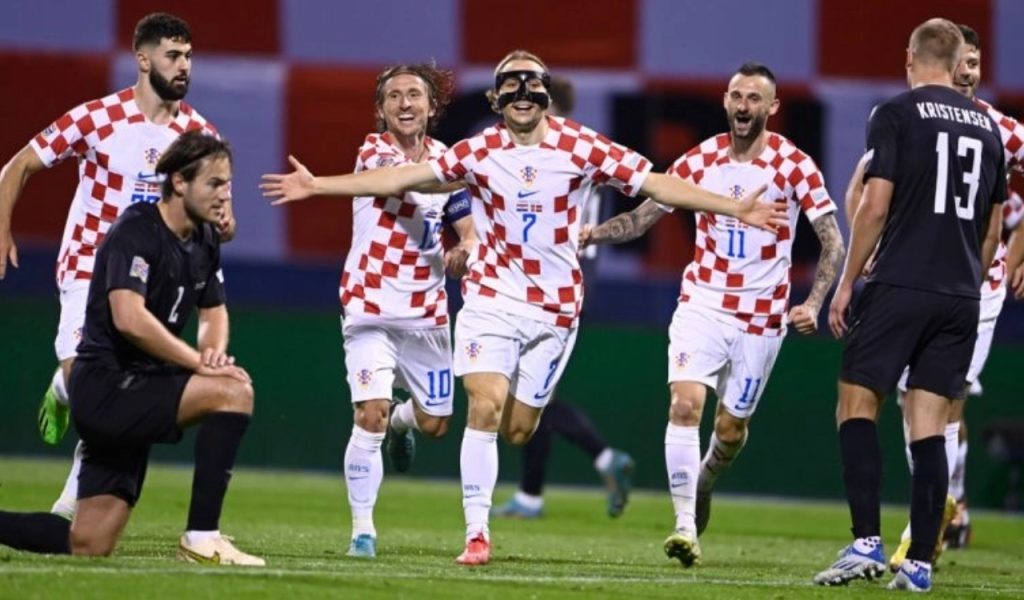
The Croatia National Football Team fans are concerned with only one thing: Does the team lose its competitive strength after the golden 2018 and 2022 World Cup campaigns? As Modric is getting old, Perisic is healing, and the change of players is approaching rapidly, fans are confused. They desire to know the future strength, strategy, and long-term identity of the team in the international football.

However, the answer is obvious: Croatia is in a natural stage of transition, not in a downturn. New generation is gifted, dynamic and balanced on tactics. The Croatia National Football Team is going through another great period with new stars, defense improvements, and more intelligent coaches. Their football culture and development programs keep on giving birth to elite players annually.
History of Croatia National Football Team
Croatia National Football Team has never disappointed the world football. Since they made their debut in the World Cup in 1998, they made a formidable opponent as they made it to the semifinals. Their reputation over the years was that they are a fearless, technical and mentally strong team that can compete with larger teams. Their strength rendered them to be one of the most admirable national teams in Europe.
Their history peaked in 2018 when the world was shocked when Croatia made it to the final of the World Cup. In 2022, the team applied the same performance and ended up in the third position. This steady performance has predetermined high expectations. The fans are now of the opinion that Croatia must always perform well in big tournaments but it is natural that every national football team in the world goes through transitions.
Present Form and Current Analysis of Performance
The Croatia National Football Team is still playing well, however, the lack of consistency seems to be caused by the changes in the squads. Their performance in qualifiers and tournaments is also competitive, but they are occasionally not able to cope with high-pressing teams. This inconsistency brings a question to fans, who believe that the team is not as powerful as it was in the Modric-Perisic years, which was its most powerful period and therefore the current era is a turning point.
Nevertheless, Croatia is one of the European powers. Their defense structure has also become better and the quality of their midfield remains bright. They do not necessarily have to be explosive in their attack, but the tactical intelligence of the team will aid them to grind the results. As the players in the future develop and learn fast, Croatia is shifting to a more dynamic, aggressive, and balanced game that befits the current game.
The important Personalities that make the Team go
Luka Modric is still the emotional and tactical head of Croatia National Football Team. His death, his reading the game, and his presence are important even at his age. Mateo Kovacic and Marcelo Brozovic are other players that offer solid stability in the midfield with him. The creativity and finishing of Kramaric still provide value to the team in attack although there is the necessity of more goal-threatening strikers.
It is even better that the future of the defense is even more promising with Josko Gvardiol becoming one of the best young defenders in Europe. His power, wit, and ball handling are international. The future generation of playmakers in Croatia are Lovro Majer and Luka Sucic. They are long term midfield solutions, as they are very creative, mobile, and good shooters, which will help the team retain its identity.
Key Strengths of Croatia National Football Team
The best thing about Croatia is its outstanding midfield culture. The nation has been known to produce elite playmakers and deep midfielders that control possession. This personality enables the national team to play against the best countries irrespective of the physical drawbacks. They are dangerous during high pressure games due to their tactical discipline, resilience in the mind and organized accumulation.
The other major strength is that they possess a defensive talent. Croatia has added players such as Gvardiol, Sutalo, and Erlic to their backline which has made it faster, physical, and technical. This is a contemporary defense that allows them to deal with transitions and attacks more readily than in the past. Together with their great mentality in knockout tournaments, the Croatians always punch bigger than their population in the world arena.
Weaknesses Croatia Needs to address to remain competitive
The biggest threat is the retirement of the main part of veterans. Modric, Perisic, and Brozovic have been driving the team over the years but they are naturally going down. It is hard to change their leadership and quality. Croatia also suffers in terms of consistency in goal scoring where they do not have a dependable striker who would make big performances at important matches, particularly in tight knockout matches.
The other problem is transitional play. Croatia is occasionally sluggish and foreseeable against fast and pressing formations, especially when the midfielders are unable to pass on the ball swiftly. Another weakness is the squad depth. Croatia breeds great mid fielders and defenders but in the wide fields they are not as deep. It will be necessary to develop stronger wings and forwards to be used in future tournaments.
Tactical Development and Style of Play
Croatia is historically a possession-oriented game based on the midfield control. Their 4-3-3 or 4-2-3-1 structures are based on short pass, composure and slow build up. Although this system is appropriate in the times of Modric, it is not always surprising. The current football requires transitions to be quicker, the wing play to be quicker, and the end third to be more direct. To be competitive, Croatia has to change.
The required energy is brought by the new generation. Such players as Sucic, Majer, and Gvardiol enable Croatia to play vertically and aggressively. Look forward to the Croatia National Football Team being more dynamic with faster counterattacks, more pressing, and more movements. This development will render the team more perilous in case of meeting the best opponents and more appropriate in the future tournaments.
The Future Leaders in the Rising Stars
The next generation of Croatia is Josko Gvardiol. His flexibility, smartness and confidence can make him a long-term defense leader. Creativity, passing vision, and balance in the midfield are provided by Lovro Majer. Luka Sucic also provides speed and aggressiveness and they are traits that Croatia had not had before. These youthful talents will be a good base in the future.
There are also exuberant attackers growing in Croatia. Dion Drena Beljo and Stipe Biuk are also promising in their speed, agility and dribbling. Although they are not yet elite, their development can become the solution to the problem of attacks in Croatia. These emerging stars ensure that the Croatia National Football Team has sufficient untapped potential to keep them competitive over a long period of time.
The Future of the Tournament: Can Croatia Compete again?
Croatia has a chance to succeed in EURO 2028 due to younger players, who are going to be mature, and more experienced players who will lead the transition. The group is likely to be a dark horse in the tournament, able to take down the best countries. Their experience and talent coupled with tactical changes can see them get to the knockout stages and perhaps further based on the matchups.
The 2030 world cup may be the big moment of Croatia. Their new generation will be at their prime age, by this time. The center of a dynamic, modern team will be Gvardiol, Majer, Sucic, etc. Provided that Croatia becomes stronger in its attack and defends its stability, it can once again be among the most difficult players in the world in terms of major tournaments.
The Next Era Roadmap to Success
Croatia needs to work on the development of faster attackers and finishing to stay strong. It will be important to invest in youth academies and provide young forwards with more opportunities. There is a need to shift to a system that is not based on Modric. Croatia needs to develop a new strategy and adjust to faster and more physical global football demands in order to remain competitive.
Physical conditioning, speed and intensity have to be the main training priorities. Defensive transitions will be reinforced and an attack more unpredictable, which will assist in overcoming high-pressure teams. The Croatia National Football Team can achieve the long-term success with the powerful planning and usage of modern strategies. When these measures are taken, then Croatia will continue being one of the best countries in world football.
FAQs
Conclusion
The Croatia National Football Team is going to a new era of challenges, opportunities, and new talent. Despite the fact that the golden generation is growing old, Croatia possesses the structure, culture, and youth development system to stay one of the leading contenders. They can improve scoring, enhance transitions, and update tactics and thus can come back and make another historical run on the world stage.