Handling Pressure in Knockout Matches
Learn how football teams handle pressure in knockout matches through mental preparation, leadership, experience, and psychological resilience.
One of the biggest psychological problems in FIFA is dealing with pressure during a knockout match. A single error is enough to terminate a tournament career in a blink of a second. Players should manage their emotions, focus and implement tactics correctly. The difference between champions and defeated teams is usually mental strength. The concept of pressure management can be used to explain why certain teams perform well in key situations and other teams fail to perform under pressures during high stakes knockout football tournaments.
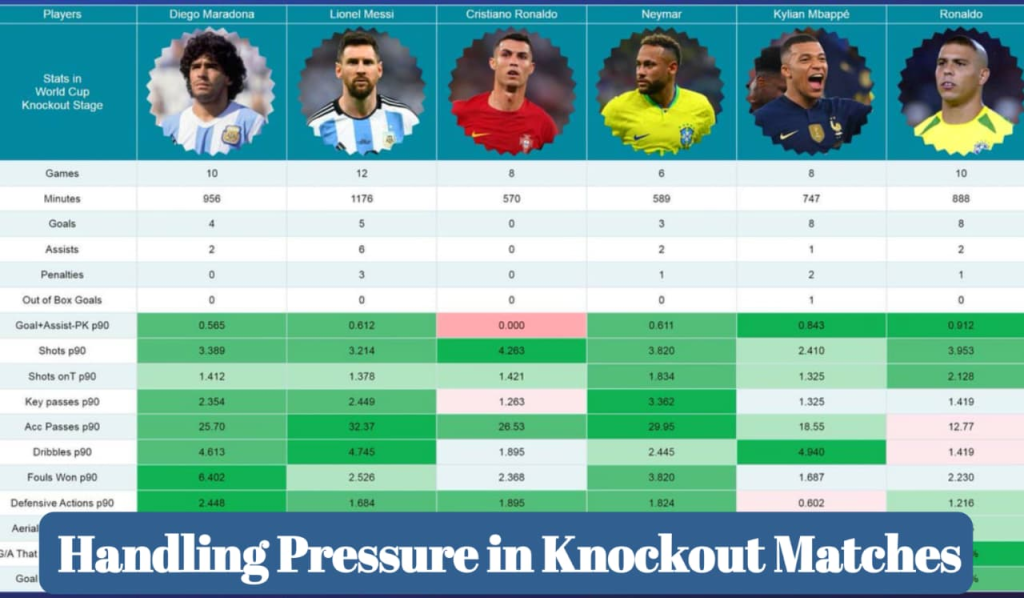
Knockout matches make the pressure worse because of the unpredictability and repercussions. There are few chances of recovery as in league games. Players are subjected to media, crowd pressure and personal expectations. Preparation, experience, and control of emotions are what make success. Teams which learn to cope with pressure become resilient, confident and clear. These attributes enable predictable performance irrespective of fear, fatigue, and excessive situational pressures in elimination based football tournaments.
Psychological Nature of Knockout Pressure
The pressure of knockout is caused by the fear to lose and the inability to go back. Players are under increased anxiety knowing that a single error can spell out elimination. The brain responds, releasing more stress hormones, which influence the ability to make decisions and motor skills. This response has to be handled by training the mind. The teams, which are aware of the psychological pressure, develop coping mechanisms to ensure that they stay calm, concentrate and possess tactical discipline in moments of intense match pressure.
Psychological pressure is also not the same to all people. The veterans may also be better equipped to deal with stress because they are accustomed to high-stress situations. The younger players can get overwhelmed. Emotional overload is minimized through leadership and guidance. The appreciation of pressure as usual assists in normalizing the responses to stress. Psychologically challenged teams will always act as a unit and be confident enough to win the knockout competition.
Importance of Mental Preparation
Psychological training is necessary preceding knockout games. The visualization methods assist players to train pressure situations. Meditation helps to alleviate anxiety and enhance concentration. Ritual activities are a source of familiarity, which soothes nerves. Coaches focus on belief and preparedness, which is explained by using mindset over fear. Proper preparation will make the players go into decisive moments clearly and not flustered and that way the game can be played effectively given the intense competition.
Expectation management is also a part of preparation. Players are also trained to concentrate on processes and not results. The splitting of breaks into smaller sections eases the degree of pressure. Confidence and emotional stability is developed through mental rehearsal. Resilience is enhanced by teams that invest in psychological training. Mental preparedness is a complement to physical fitness thus maintaining a consistent performance under the pressure of the mounting pressure of elimination based football games.
Experience and Match Exposure
COP is largely dependent on experience. Gamblers that have encountered a loss game know ups and downs. Knownness decreases anxiety of the unknown. The experienced players do not panic in crucial situations. Their existence makes teams stable. The experience will enable faster recovery of the emotions following errors and avoid breakdown in the situations of high pressure.
Practice in high pressure matches enhances toughness of the mind. Competition is the best way through which players acquire coping strategies. Decision-making is enhanced by stress. Teams with mature cores have a high likelihood of winning over technically stronger teams that are not composed. Experience does not take pressure away, but changes it into manageable intensity. This mental advantage is decisive in closely fought knock out football matches.
Role of Leadership on the Pitch
The leadership plays a significant role in knockout games. During challenging stages, captains direct emotional reactions. The effective use of language minimizes panic and confusion. Leaders motivate colleagues following mistakes. Relaxed movements and commands stabilize the structure of the team. Leadership will make the anxiety be a collective responsibility so that focus will not be lost amidst the external and internal pressure during elimination games.

Leaders also establish standards of behavior. Team mates are affected by work rate, discipline and composure, which act on them subconsciously. Skilled leaders handle relations with referees prudently. When necessary they make the game slow. Emotional anchoring is offered by leadership. Teams that have good on-field leaders can deal with the pressure better and they stay organized and believe until the last whistle in knockout games.
Tactical Discipline Under Pressure
Being disciplined at a tactical level is more difficult when under pressure. Fear will lure players to lack structure. The tactically organized teams mitigate the risk. Clearly defined roles make the players concentrate on the duties. Punishment reduces unruly decision making. Coaches lay stress on retention of shape and space to control stress and retain control in unpredictable situations where knockouts take place.
Organized strategies give psychological protection. Players have faith in systems when emotions are elevated. Triggers, defensive lines and transitions are well coordinated. Cognitive overload is also minimized by tactical clarity. Disciplined teams take in pressure effectively. This flexibility/structure ratio enables the capacity to effectively react to high pressure instances of knockout without breaking down emotionally.
Crowd and External Pressure
The pressure in knockout matches is increased by crowds. Home support is motivational and expectant. The environments away challenge emotional strength. Concentration is influenced by noise, hostility and momentum changes. Players are required to eliminate distractions and stay in concentration. Teams that are trained to deal with external stimuli play consistently whether in venue or crowd density.
Pressure is also put on the media. Stories build up psychological pressure prior to games. Social media exaggerates demands. Players are taught to be non-emotional towards external opinion. Emphasis on objectives within the organization safeguards trust. The isolation of teams allows them to have clear minds, which ensures the stability of performance in a knockout situation that is emotionally charged.
Managing Mistakes and Setbacks
The errors are bound to happen in knockout games. The responses of teams dictate results. Situations are aggravated by panic reactions. Stable recovery averts change of momentum. Players are socialized to have a reset mind upon mistakes. Rapid affective rebounding upholds order and self-esteem. Successful teams do not consider mistakes as a defining moment.
Goal concessions challenge the mind at the moment. Strong teams are proactive and not defensive. After failure, there is more communication. Leaders reinforce belief. Tactical discipline is soon taken up again. To deal with failures, one needs to control emotions and shared accountability. Teams that excel at this part will not only be competitive up to the last minute but also in extreme conditions of knockout.
Penalty Shootout Pressure
Peak pressure is the penalty shootouts. There is a combination of isolation, silence and expectation. Routines assist players to cope. Concentrate on the method and not on the result. Psychological tactics that are employed by goalkeepers are aimed at interfering with confidence. The success rates in these decisive moments are greatly promoted by preparation and rehearsal.
Penalties are practised in the teams to normalise stress. Familiarity reduces fear. Players are chosen by coaches according to their calmness and not their status. It is important to control breathing and visualization. Shootouts are more rewarding to the strength of the mind than the body. Teams that are psychologically prepared usually win over technically superior ones in knockout conclusions that are based on penalties.
Coaching Influence During Knockouts
Coaches can impact pressure management by means of messaging and preparation. The anxiety is minimized by using non-anxious communication. There are no confusions because of clear tactical instructions. Emotional intelligence enables the coaches to feel the team morale. There is no panic in making changes. The coaching behavior has a direct influence on the player confidence in high pressure knock out matches.
The pressure management is also reflected in substitution decisions. The addition of composed players makes the momentum constant. Coaches promote faith as opposed to fear. Confidence in training comforts players. Teams that are managed by emotionally intelligent coaching staffs are better out of pressure which keeps them focused and flexible in challenging conditions during knockout tournaments.
Turning Pressure into Motivation
Efficient teams repackage pressure as an opportunity. Legacy is offered through high stakes matches. Players who are driven by the challenge play freely. Fear is lessened through positive framing. Pressure is embraced as confidence builds when it is confronted. Such change of mindset turns stress into competitive energy.
Strongly believing teams perform well when there is knockout intensity. the common cause enhances cohesiveness. Stress contributes to focus and hard work. When there is emotional alignment it improves performance. When pressure is embraced by teams as a component of being great, the teams open the doors to the highest levels of performance when it comes to knock out football situations.
FAQs
Final Thoughts
The ability to cope with pressure during a knockout match is an indicator of success in the top level of football. The results are determined by mental preparation, leadership, experience, and tactical discipline. The teams that do not feel threatened but take the pressure as they are are clear and confident in their performance. Emotional control enables the players to be able to quickly overcome their mistakes. Finally, pressure management is what makes champions and teams that fail at critical tournament situations.
With football still developing it is the psychological strength as much as the physical strength that counts. Knockout matches are the reward to the teams that are calm, united and disciplined. Pressure control is significant to coaches, leaders, as well as preparation systems. Once the pressure is turned into motivation, the players open the door to the best performance. Learning to control pressure would guarantee consistency, endurance and success in the most competitive football situations.