How Referees Prepare For FIFA World Cup
FIFA 2026 referees prepare with the fitness training, rule mastery, VAR practice, and match simulations to handle pressure and make accurate of decisions.
The FIFA World Cup 2026 referees will be subjected to immense pressure to make correct decisions that will be scrutinized all over the world. Some of the preparation includes vigorous physical training, reading, and psychological conditioning. Referees study teams, players and possible situations of games to be very vigilant in a high-paced game. They are important in making sure that there is fair play, consistency and smooth flow of the tournament in all matches during the world cup.
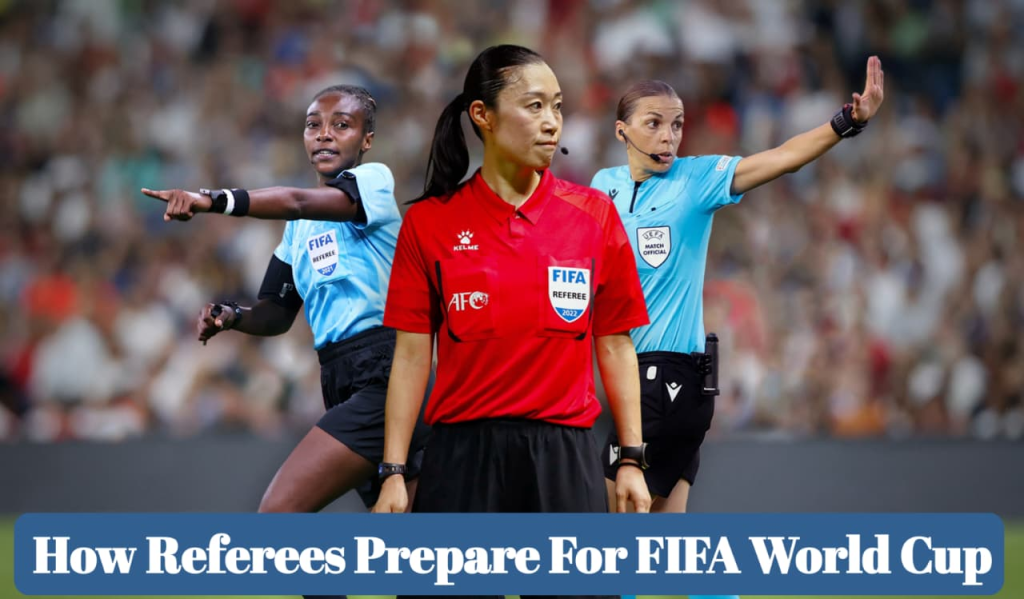
In addition to physical fitness, the referees also concentrate on communication and working with assistants and the officials of the VAR. They attend workshops, seminars, and simulations in order to make decisions under pressure. Comprehensive training means that the referees are capable of controlling conflict, dissent control and authority upholding and implementing the rules correctly. This whole body strategy equips the authorities to officiate matches with confidence at FIFA 2026.
Fitness Regimens and Physical Training
The best referees are as fit as possible to match the star players. The preparation of FIFA 2026 focuses on stamina, speed, and running speed. The training programs involve interval running, strength, and recovery. Physical preparation enables the referees to be in close proximity to the play, see events, and undertake prompt actions. Lack of fitness would interfere with judgment and consistency in the field when games are intense.
Strength conditioning is a supplement to endurance and helps referees to fight fatigue in long games. Flexibility training helps to stop injuries, but also improves movement in the field. Fitness exercises replicate conditions of the match such as sprinting following a rapid counterattack and staying focused when being pressured. Such training will make referees be physically fit to minimize mistakes and improve the overall referee performance at the World Cup matches.
Tactical Analysis and Match Preparation
Referees research on team strategy, style of play and the individual tendencies of players prior to the matches. Learning the formations and strategies assists the officials to forecast the incidence, off-side traps, and set-piece situations. Tactical preparation reduces mistakes as referees are able to place themselves in the best position and apply rules in a uniform manner. As FIFA 2026, referees are able to be fair and adapt to the changing dynamics of matches across various teams through in-depth analysis.
Referees read about team tactics, their playing style and players tendencies prior to the match. It is better to understand formations and strategies so that officers can have a clue about the incidents, offside traps, and set-pieces. The tactical preparation is effective in reducing mistakes and helps the referees to stay in the best position and apply the rules uniformly. In FIFA 2026, referees are well-analyzed to achieve fairness and respond to the dynamics of matches in various teams.
VAR Training and Technological Integration
Video Assistant Referee (VAR) technology is an important part of FIFA 2026. Referees are provided with a comprehensive training on VAR to be able to interpret the video reviews correctly, communicate effectively as well as make timely decisions. Software interfaces, replay angles and protocol knowledge will provide a smooth coordination. On field judgment with the integration of technology increases the credibility of the decision but reduces the number of errors which may change the match outcomes.
To ensure that the practice is accurate even during time pressure, technological integration must be practiced at all times. Referees are engaged in situations of simulated matches, overseeing goals, penalties and fouls through VAR. There must be clear communication between the referees and the VAR officials in order to prevent confusion. Both of these aspects of technical ability and situational awareness would equip referees with the knowledge to deal with complicated incidents at the World Cup confidently.
Psychological Conditioning and Mental Resilience
It takes psychological resilience to deal with international attention and stressful situations. The psychological training of FIFA 2026 referees is aimed at their staying calm, focused and neutral. They are visualization, mindfulness and stress management techniques. Mental strength enables the officials to make the same decisions, protect power and not be affected by the player actions, the crowd’s reaction, or the press attention in a high-stakes game.
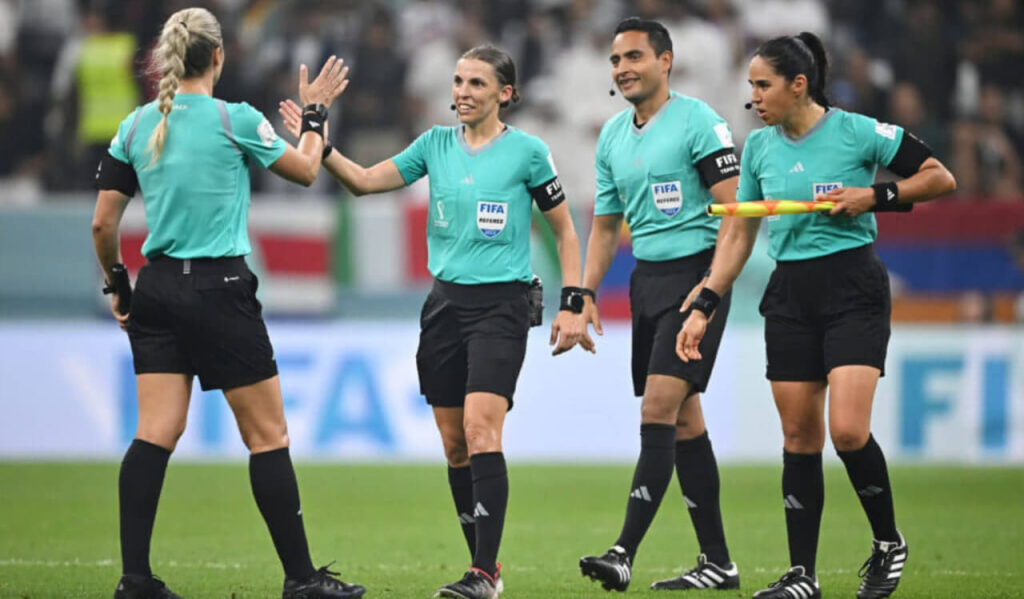
Referees are also trained in scenario drills in order to handle disagreements and dissatisfaction among the players. Mental readiness assists in making quick-judgment, being able to control emotions, and being confident when making decisions based on laws of the game. Good psychological conditioning will guarantee that referees will be in their best state of mind to carry out during the tournament pressures without compromising fairness and consistency when making crucial decisions during tough times in FIFA 2026 games.
Communication and Teamwork with Assistants
Assistant referees are involved with the referees in order to have correct decisions on offside and detection of fouls. The preparation of FIFA 2026 entails communication exercises, coordination, and simulation of a match. Good working teamwork entails fewer mistakes, continuity, and rule adherence. Confidence among the officials is important in order to facilitate decision-making during a fast paced match particularly in the knockout stages of the tournament.
Officials also train on how to deal with conflicts as they are playing. Co-ordination is improved by use of standardized hand signals, verbal communication and briefings before each match. Effective communication eliminates misunderstanding and therefore the referees can effectively handle complex situations. The collaboration between on-field and sideline officials offers a complete area coverage to offer consistency in their judgment, and reduce instances of disagreements amongst teams and integrity of the tournament throughout FIFA 2026.
Handling High-Pressure Situations
Referees are highly put under the scrutiny of fans, media and players during high profile matches of the world cup. FIFA 2026 simulation puts the officials through stressful situations, which helps them to remain calm. Training involves handling of severe fines, missed targets, and player demonstrations. Referees are also trained to face difficult decisions with an unbiased and timely decision without affecting fair play and the game and maintaining the rules of football under pressure.
Situational awareness, concentration and confidence in judgment are also a part of pressure management. Officials are also involved in reading pace, dissent control and rules application without favor. It can be prepared in advance to create control when the emotions become overwhelming and minimise errors. Proper management of stress means that referees will be able to arrive at clear and accurate decisions at key points of the world cup, maintain credibility and fairness of the tournament.
Travel and Environmental Adaptation
Referees in the world cup are exposed to various weather conditions and time zones and they need to adjust to be at their optimum level. The programs of FIFA 2026 involve acclimatization plans, sleep, and hydration. The movement between host cities requires proper planning in order to remain alert and fit. Adjusting to the environmental conditions is used to keep the referees on par, energetic, and focused during the hectic tournament.
Officials too, train on acclimatization to altitude, humidity and pitch. Simulation games are used to simulate the conditions in stadiums, which prepares referees to different weather conditions. The energy levels have nutrition and recovery protocols to help them. Through proactive handling of environmental issues, the referees will be able to make accurate decisions and minimize the errors associated with fatigue, which means that the quality of officiating will remain high in several matches at FIFA 2026.
Continuous Learning and Feedback
The FIFA 2026 referees are involved in continuous training to acquire skills. Feedback on previous performances is collected during regular workshops, seminars and watching videos. Referees review mistakes and evaluate placement and meet with the teachers to talk about the methods of decision-making. The recurring learning processes make judgments better, inconsistencies to be minimized, and confidence to be gained, whereby the referees can provide accurate officiating under the demands of the competition within the world cup.
FIFA 2026 referees are also engaged in continuing education to polish skills. Feedback on previous performance is done through regular workshops, seminars and video reviews. The officials examine the mistakes made, review the positioning, and deliberate with teachers on how the decisions should be made. Constant training will help in better judgment, lessen incongruencies, and boost self-confidence, which will make sure that referees give proper officiating in the stresses of the World Cup games.
Final Physical and Mental Preparation
During the period before the tournament, the referees are made go through rigorous final training that is geared towards optimum fitness, tactical training and psychological training. The programs of FIFA 2026 focus on simulation of the game, quick-decision training, and stressfulness training. Authorities make sure that they are prepared to handle physical requirements, rapid actions and high-stakes decisions. Full final preparation brings in optimized performance, minimization of errors and confidence in the officiating of decisive matches during the world cup.
Pre-tournament briefings of team strategies, VAR procedures and local stadium conditions are also part of this stage. Communication with assistants is also practiced to the full extent, so that there is no misunderstanding and it is carried out successfully. Through physical conditioning, mental resilience, and awareness of situations, the referees have all it takes to deal with the challenges, complexities and pressures of FIFA 2026 with fairness and professionalism at all times.
FAQs
Final Thoughts
Training of referees to FIFA 2026 will entail physical training, learning skills, mental strength and through collaboration. Through comprehensive training, the officials can deliver high performance, accuracy and fairness to the world. Fitness training to the implementation of VAR, all elements of preparation lead to proper management of matches, and minimization of controversies, and later improvement of the overall standards of tournament officiating.
Referees are a crucial component of FIFA 2026 due to their experience, technology, and constant education. With the physical, mental, and technical preparedness, the officials will be able to go through challenges with confidence. This is because with all their planning and preparation the refereeing of all the games is smooth, which maintains the integrity of football, and players, teams, and fans enjoy a fair, consistent, and professional refereeing process during the World Cup.