Language & Translation Services at Stadiums
Discover language and translation services at stadiums, including multilingual signage, interpreters, apps, and printed materials for an inclusive fan experience.
The translation and language services at stadiums have gained prominence with the increased number of fans visiting the stadiums due to football and other sports events. The establishment of clear communication would increase the general fan experience and minimize the confusion on the matches. The services assist foreigners in moving around the ticketing area, concessions, bathrooms, and emergency procedures. The diverse audience is facilitated by multilingual employees, computer applications, and signs, and anyone can attend the event. The focus on the accessibility of the language shows the interest in the inclusivity and customer satisfaction.
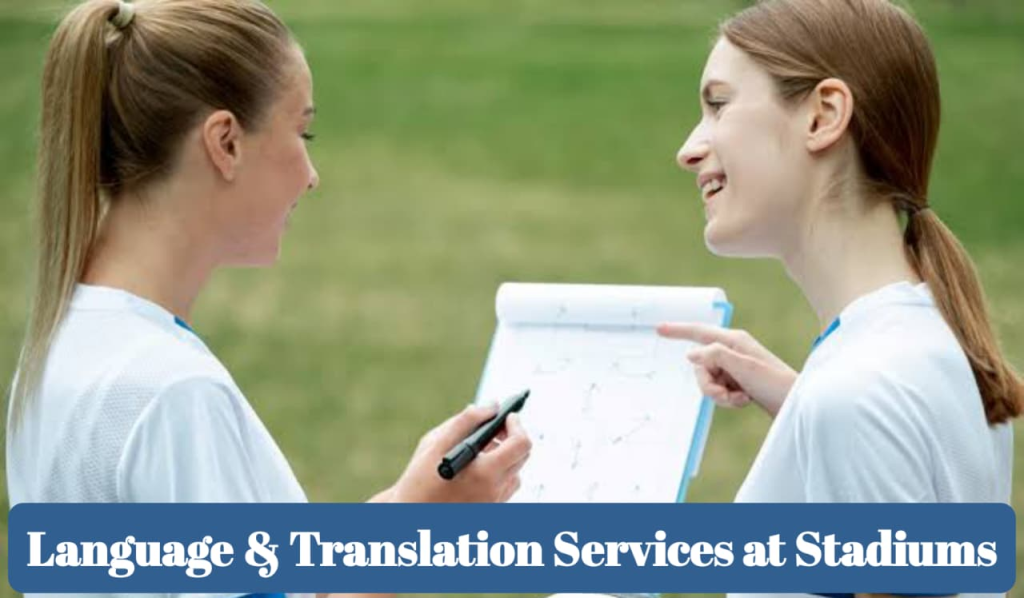
Alongside physical navigation, there is the language service that facilitates real time communication between fans and the stadium staff. Translation application, interactive kiosk and on-site interpreter are used to overcome language barriers. The fans will be able to listen to announcements, commentary, and safety instructions in their native language. It has become the norm in many stadiums to invest in an exhaustive language strategy to increase the interaction with international fans. Finally, the good language and translation services will make the event in the stadium easier, safer, and more enjoyable.
Multilingual Signage and Directions
Stadia are also adopting the use of multi lingual signs to direct fans effectively. Multi-lingual directional signage assists visitors to find entrance, exit, rest room, and concession areas. There are clear illustrations, signs, and maps which support written instructions in case of the lack of literacy or language understanding. Multilingual signs would make sure that no fans are forced to move around and require the help of the staff only. This will minimize congestion and overcrowding of major sections.
It is very important that the signs should be placed properly to make them visible and effective. Major junctions, corridors, elevators, and signs are usually placed to ensure as much guidance is as possible. Digital boards with live updates of matches in various languages enhance the engagement of fans. The use of color-coded maps and icons makes the navigation easy to most visitors of every age. All of this allows the navigation of the stadium to be intuitive to a variety of people.
On-Site Interpreters and Assistance
Employing on-site interpreters will enable stadiums to offer individual assistance to foreigners. Interpreters help with ticketing, directions and safety directions to the fans. They will also assist in special requests, lost items or emergencies where it is necessary to communicate clearly. Cultural and linguistic differences can be overcome with the help of trained interpreters who would improve the fan experience. Visitors feel included and supported because of their presence.
Interpretation service is usually placed at information desks, entrances, and VIP areas. They have the ability to translate as well as offer instructions on written documents. Big stadiums could have interpreters who work in multiple languages at the same time. The coordination of the staff will make sure that there will be interpreters at the critical periods when the matches take place. Through direct support, stadiums make their venues welcoming to everyone who comes to see them.
Digital Translation Tools
Sophisticated stadiums are adopting the use of digital tools to offer language assistance. Smartphones or devices provided by stadiums have translation apps that can help the fans interpret announcements and signs. QR codes located at strategic points can give an immediate translation of the menu, maps, or rules. Other stadiums provide commentary in various languages which are streamed live through mobile applications. Online resources help to save time on long queues to receive physical help and enable fans to go through the web on their own.
Multilingual interactive kiosks are also used to improve communication. The fans will be able to find the location of the restrooms, concessions, or exits in the language of their choice. Square Stadium applications can be used to share real-time and directional information via push notifications. On-screen translation of maps or seating plans can be provided with integration with augmented reality capabilities. These inventions will make sure that the language barriers do not spoil the fan experience.
Multilingual Announcements and Commentary
Live commentary and public announcements in different languages assist international fans to track the game. Stadiums generally offer audio translation services by mean of headsets or cell phone apps. Such important messages as safety warnings, announcements of lost children, or updates on events are aired in various languages. The availability of multilingual commentary means that the fans are not only in a position to know the happenings in the match but are also able to cheer. This makes it more interesting and immersive to everybody.
The multilingual media coverage in the press zones and the VIP lounges is also available in some of the venues. Broadcasters and commentators are offered translation services to access the international market. The translation is done in real-time which makes the chances of misinformation and confusion less. The fans are able to be involved in the chants, applause and celebrations in a way that is understandable. The choice of multilingual commentary is a fan-oriented strategy that is inclusive.
Printed Materials in Multiple Languages
Programs, schedules and maps are being offered in various languages in printed form. Based on multilingual brochures and stadium guides, fans are able to plan on how to visit the stadium. Critical details on seating, exits or on emergency procedures are translated into an understandable format. Multilingual printed sources are an addition to digital tools and make sure that even non-smartphone users are included. This business model caters to various fan bases.

Team rosters, rules, and venue regulations in various languages are frequently a part of the programs. There are maps that indicate concessions, toilets, and first aid points, which show fans the direction during their stay at the stadium. In multilingual ticketing, there is less confusion in entering and leaving. QR codes are usually used along with printed materials to provide further translation. This integration would provide the fans with reliable information that is easily accessible.
Staff Training for Language Awareness
Sensitizing the staff in stadiums to language awareness will be able to improve communication with the international visitors. The employees are educated about the simple greetings, expressions, and cultural etiquette towards fans of other nations. This training will assist the staff to support the visitors even without formal translation tools. Staff awareness is also conducted to train the staff on how to deal with non-native speaker inquiries. Professionally trained employees will help create a friendly and professional stadium environment.
The proficiency is maintained by periodic refresher courses and training based on scenarios. Employees are taught how to communicate with interpreters and apply digital translators. Role-playing games are imitations of the actual fan interactions to build confidence. The presence of multilingual employees will be able to be used strategically at peak events. Being well trained will guarantee effective communication and enhance the general satisfaction of the fans.
Emergency Communication and Safety
Emergency preparedness is dependent on language and translation services. The fans must have the evacuation routes, first aid points, and safety measures well in place. Emergencies are avoided by carrying out multilingual announcements, signage, and guidance of staff members. Translation services are important so that the international visitors get the correct and prompt information. Effective communication plays a significant role in the security and welfare of every person attending.
Language support is commonly used in emergency drills to test efficiency. Stadium management arranges interpreters and digital tools to span a variety of languages. The fans are informed on emergency contact numbers and protocols in their language of choice. Clarity also ensures order and minimization of confusion in emergency situations. Promoting language accessibility will increase the level of safety and confidence among all fans.
Integrating Technology for Enhanced Experience
The efficiency of the language and translation is enhanced by the integration of technology. The assistance is provided immediately through mobile applications, AR maps, and live chat services. Real-time guidance is being invested in by stadiums through AI-based translation systems. The use of digital feedback allows enhancing the translation services following fan experiences. Language accessibility is smooth and consistent due to technology.
Smart bracelets or earpieces can also be used as wearable devices that can help to translate something in real-time. Apps and streaming services are integrated with the Wi-Fi in the stadium. The fans are able to navigate, place orders, and comprehend announcements on their own. Technological solutions make the use of staff reduced when making routine inquiries. Through innovation, the stadiums will be able to serve a global audience.
FAQs
Final Thoughts
The language and translation services in the stadiums are necessary to build accessible and inclusive experiences. These services reduce communication barriers among international fans through multilingual signs and printed materials, on-site interpreters as well as digital devices. Proper translation will increase safety, interest and satisfaction. The stadiums that consider the language accessibility show their interest in the international audience and create a friendly atmosphere. Since sporting tourism is still gaining popularity in the global arena, a detailed language service will be an essential part of the stadium business.