Mental Preparation Routines of Players
Discover Mental Preparation routines of football players, including visualization, focus drills, mindfulness, stress management, and peak performance strategies.
Psychological training is an important part of football performance. To be successful in the field, the players should be able to cope with stress, be focused, and gain confidence. Organized habits promote focus, judgment, and emotional regulation. Such techniques as visualization, goal-setting, mindfulness, or meditation are common. Good psychological conditioning has the effect of making players perform in a steady manner during the training sessions and high pressure match scenarios.
Mental toughness assists athletes to overcome difficulties and disappointments. Trained brain players are able to remain composed even when there is pressure and predict the moves of their opponents and react to them in a strategic manner. The coaches combine psychological training with physical training. Mental preparation drills boost teamwork, communication, and resilience. Through mental orientation, players have a competitive advantage, which in most instances leads to success in the professional levels.
Visualization Techniques
Visualization enables the players to visualize the perfect performance prior to matches. They visualize the scoring, passing, defending or tactical situations in their minds. This rehearsal of the mind enhances the neural pathways and enhances instinctive responses. Frequent visualization builds confidence, as well as minimizing anxiety, enabling players to cope with pressure. It also trains the brain to perform complicated abilities precisely when in a competition game or in a tense situation.
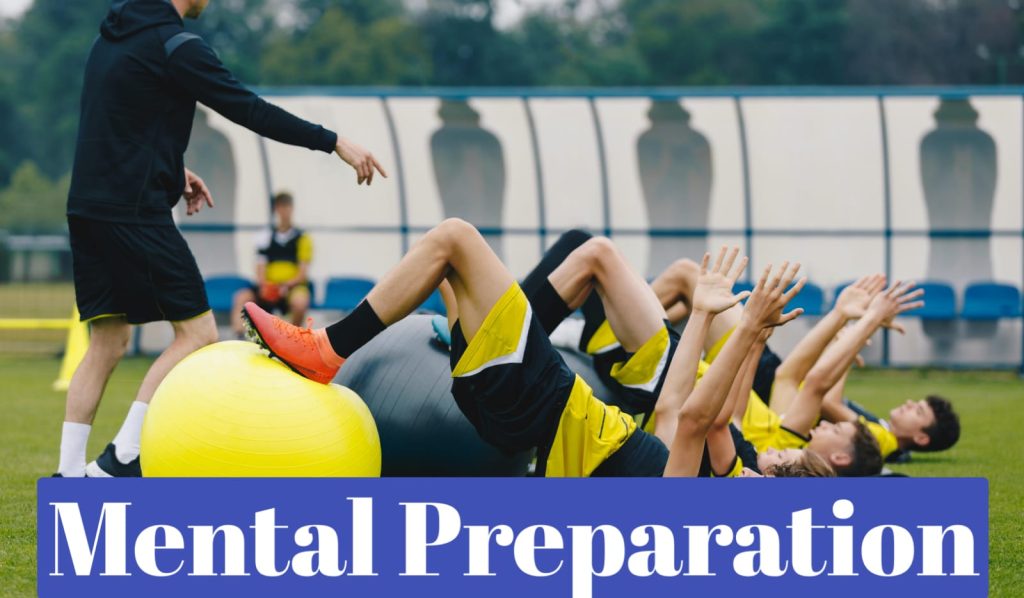
Coaches tend to lead visualization in teams in order to align with team strategies. Players practice mentally against opponents, their tactics, formations and possible scenarios. The use of visualization and physical drills enhances the practice and consciousness of skills. In the long run, this practice enhances decision making, spatial cognition and match preparedness. The essential aspect of consistency and excellence in football elite preparation and performance is visualization.
Goal Setting
The systematic goal setting gives the players guidance and inspiration. Short and long-term goals assist athletes in concentrating on skill development, physical fitness and a sense of tactics. Settable goals improve dedication and responsibility as well as promoting constant development. Goal setting is also an excellent way of enhancing mental discipline and gives clear standards of progress to follow, which serves as a motivating factor during tough times and tough competitive situations.
Goal setting also increases resilience through learning students to change strategies in case of challenges. Looking back at success builds confidence, whereas failure to achieve goals provides learning points. Coaches focus on specific, attainable objectives which are tied to the results of performance. This is an organized process that makes the daily training and match goals to be in line with each other, and players could make the most out of potential and be psychologically ready to face stressful moments.
Mindfulness and Meditation
Mindfulness enhances concentration and anxiety among football players. Breathing exercises and meditation can enable the athletes to stay in the here and now, which increases the concentration during the matches. Mindfulness enhances emotional stability, which enables players to act well in times of stress. Incorporation of meditation into everyday activities also enhances resilience, which provides regular mental clarity during training and other high-stakes competition in the professional and international levels.
Guided meditation is a technique that helps players to create a visualization of performance and manage stress reactions. Brief meditation periods between exercises or prior to competition enhance calmness and preparedness. Self-awareness and confidence are also developed through meditation. These practices eventually lead to distraction minimization, focus enhancement, and decision-making. Mental training programs in modern football nowadays include mindfulness practices as one of their core elements.
Pre-Match Ritual
Pre-match rituals bring about consistency and psychological preparation of the players. Such activities as music listening, stretching, or visualizing performance are signals to the brain to pay attention. Ritual also make one less anxious and build confidence. Through repetition of routines, players develop a sense of comfort and focus, which enhances their skill of how to execute the strategies well without getting stressed at certain situations of high pressure of a match.
Collective rituals are also arranged by teams to enhance unity. Repeatedness and familiarity give players psychological benefits. Coaches stress the importance of rituals in mental preparation in order to maximize performance. These drills help to maintain concentration, discipline and get the players ready psychologically to compete at the highest level and be ready at all stages of a match or a tournament environment.
Mental Resilience Training
Mental resilience enables players to bounce back fast after making a mistake or losing. Training includes difficult simulations, problem-solving tasks and stressful situations to enhance coping resources. Resilience should be developed, which guarantees that athletes are focused, confident, and motivated even in hard times. Mental toughness is very important in performing consistently in the physical and psychological conditions of professional football games.
Adaptability also gets better due to resilience. Players get to know how to change tactics and how to stay calm in unforeseen circumstances. Coaches give competitive exercises that are match-like to test emotions. These practices over time lead to the insourcing of players to manage stress, focus, and deliver consistent results which provide a psychological edge to the teams over their opponents during important matches.
Mental Resilience Training
The focus training improves cognitive endurance and game attention. Players train to multitask, make decisions fast and to train their tactics to enhance the mental sharpness. Such practices decrease mistakes due to fatigue or lack of concentration, and the routines ensure steady performance during the training and during competitive games, and training the players to act instinctively to a scenario on the field that requires both abilities and swift decision-making.
Awareness to team mates and opponents can also be enhanced through concentration exercises. With the re-creation of the match conditions, players can hone reflexes, positioning and anticipation skills. Frequent focus training strengthens mental endurance and athletes are able to make decisions on a high level when under pressure. These exercises are combined by coaches to maximize the performance of individuals and teams in the harsh competitive situations.
Management Strategies of Stress
Stress management is extremely important in ensuring optimal performance. Breathing, progressive relaxation, and visualization are breathing techniques, which players employ to decrease tension. Stress management helps to avoid mental fatigue, enhance concentration, and achieve calmness in the course of matches. These drills can be incorporated in the daily preparation of players to keep them calm when under pressure as well as promoting general mental health and stability in performance.
Counseling and psychological support is also done through teams to deal with performance anxiety. These methods are reinforced through regular practice which makes one resilient and focused. Stress management habits are a second nature to players and with time, players are able to play to their best regardless of the situation. Physical training to the level of elite football is supplemented by mental stability acquired in such ways.
Team-Building and Communication
Mental preparation entails increasing the teamwork and communication. The players are taking part in team activities, strategy meetings, and relationship-building to enhance unity. Communication has the effect of minimizing errors, enhancing coordination and establishing confidence. Team-building also improves psychological preparedness, as it keeps the players together and concentrated in difficult circumstances of the match or in the climax of the tournaments.
Coaches incorporate mental training in the team practices in order to strengthen joint work. The knowledge of the roles and responsibilities of each player enhances the overall performance. Trust and mutual attention can be developed to enable athletes to help each other in times of stress. Effective communication within the team teams increases resilience and equips players with anticipated and unanticipated situations in the game, which leads to winning the match.
Sleep and Recovery
Rest and sleep are significant in keeping the mind clear. Adequate rest enhances concentration, response time, decision making and control of emotions. Players use regulated sleep patterns in order to be in the best position possible. Sleep is supplemented by recovery routines, which include naps, stretching, or meditation, which contribute to mental clarity, fatigue reduction, and stable performance even among training sessions and high-intensity matches.
Proper rest also minimizes risks of injury and burnout of the mind. The ability to stay calm and strong throughout the competition matches is achievable to the players, who are more concerned with sleep. Coaches also focus on recovery as a component of mental preparation to make athletes physically and psychologically fit to meet the demands of the matches so that they can perform on a high level during the whole season or tournament.
Professional Support and Counseling
Sports psychologists offer systematic psychological assistance to players. Through counseling, anxiety is managed, confidence is built and coping strategies are developed. Professional guidance also helps to make mental routines individualized so that they can help to focus, build resilience, and improve performance. Gamers that interact with mental health experts will always play more consistently in crucial games.
The psychologist also deal with motivation, emotion control, and reaction to failures. Training in structured sessions is an auxiliary to physical and technical training, which enhances the general mental preparation. Mental preparation is an important part of the modern elite football performance strategies because it guarantees athletes psychological balance and the development of mental skills, as well as the full realization of their potential.
FAQs
Final Thoughts
Mental training is just as important as physical training of football players. Visualization, mindfulness, focus exercises, and resilience training are techniques that can be used to improve pressure-based decision-making and performance. Routines are activities that assist athletes to remain consistent, calm and confident when competing. Training the mind will see the players ready to take challenges and deliver their best during the stressful matches and tournaments.
Incorporating the mental skills into the daily training enhances the performance of both an individual and a team. Technical preparation is supplemented with sleep, rest, stress management, and professional counseling. The development of football makes mental training a key to success, which helps the players to cope with pressure, make quick decisions, and be consistent, turning them into the representatives of elite sportsmen, who can achieve long-term results.