Weather Conditions Match-by-Match Impact in Football
Discover how weather conditions affect football matches, influencing tactics, stamina, pitch quality, and match-by-match performance outcomes worldwide.
Weather conditions are decisive factors in football, influencing match tempo, tactical approaches, and outcomes on a case-by-case basis. Unlike controlled indoor sports, football is exposed to heat, rain, wind, humidity, and cold. These elements directly affect player stamina, ball movement, decision-making, and tactical execution. Often overlooked, weather remains a powerful hidden force that can shape results, especially during high-intensity tournaments like the FIFA World Cup 2026.
Match-by-match weather effect is the reason why the same teams play differently in different matches. One side that favors dry weather will not be able to perform well in rain or extreme temperatures. The coaches should be able to change strategies, formations, and the choice of players depending on the conditions of the match. The knowledge of the role of climate in football performance enables one to understand the inconsistent performance, unexpected losses, and the frequent failure to predict in major international football tournaments.
Heat and High Temperatures
Extreme temperatures have a great influence on stamina, hydration, and concentration of players. During hot weather, the energy level decreases more rapidly, making one feel more tired and lowering the intensity of pressing. Players save on movement, reduce tempo of matches. Heat is another factor that increases the risk of dehydration, and this leaves teams to think through substitutions. Teams that have never been to hot climates usually find it tough physically and the acclimatized teams have a match by match advantage.
Heat affects management of games and tactics. To reduce physical load, coaches are partial to tight formations on defense and a restricted amount of ball flow. Counterattacking teams are subject to high temperatures which slow down sprint frequency and recovery speed. Extreme hot matches usually experience few goals and careful tactics. Adaptive teams in harsh thermal environments have more consistent performances in regard to pacing and hydration strategies.
Rain and Wet Pitch Conditions
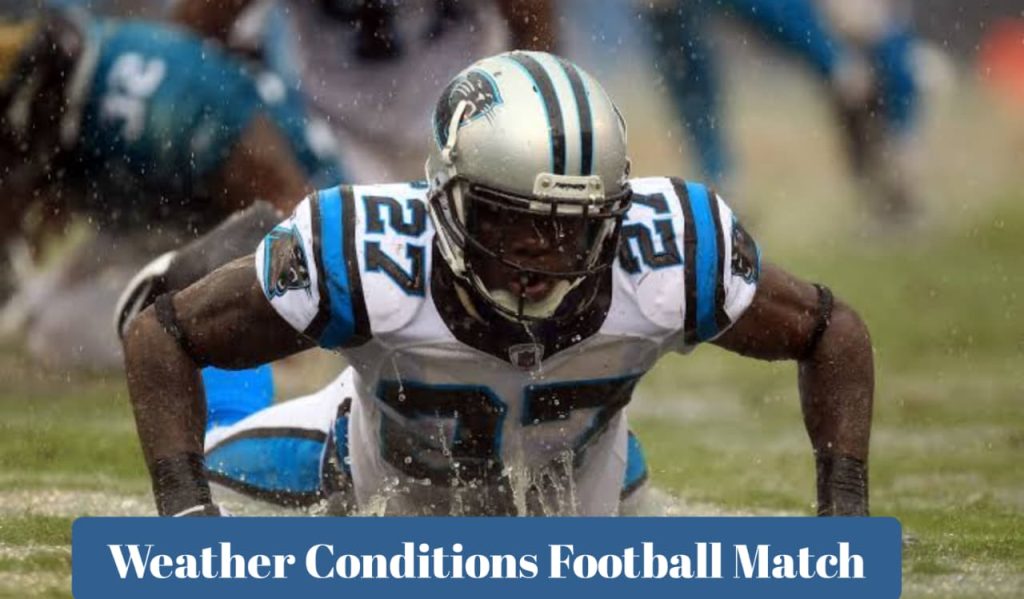
Rain changes the pitch conditions of the ball, controller and footing of the player. Wet surfaces make the ball more fast and difficult to control, thus making the pass faster. Goalkeepers have a problem with handling, and defenders have a higher risk of slips. The teams that depend on the short passes have to change their manner of passing, and the use of direct styles tend to be advantageous in the rainy games due to the fast-flowing and slick pitches.

Physical duels and tackling are also affected by rain. Sliding difficulties are more efficient and run a risk of fouls and injuries. The players need balance and pre-foresight, in order to control random movement of the ball. Discipline is needed on a tactical level, where errors are magnified. Teams with experience of operating in wet conditions tend to be more successful in exploiting chaos, and have a clear benefit over technically superior but less adaptive rivals.
Wind and Air Resistance
One of the most neglected weather conditions in football is wind. Powerful winds interfere with accuracy of passing, precision of crossing, and long ball tactics. Goal kicks and set pieces will also be unpredictable and this will impact defensive organization. Teams that are playing against the wind find it difficult to construct attacks with those playing tail winds gaining territorial advantage at certain half of the matches.
The coaches will be required to change the tactics depending on the wind direction. Short passing, ground play as well as controlled build up minimizes wind effects. Teams that are dependent on aerial duels or shooting at long distance are not consistent. Wind influences the positioning of goalkeepers and ball paths as well. Intelligent teams take advantage of winds in a tactical way and they control possession and territory in every half of the game.
Cold Weather and Low Temperatures
A cold environment has an impact on muscle flexibility, response, and risk of injury. Players take more time to warm-up and have difficulty with stiffness, especially with abrupt acceleration. Low temperatures lower the level of touch sensitivity, which affects ball handling and shooting. Teams that are not used to low temperatures tend to play safely, restraining their pressing and high-speed counterattacks during the game.
There is also psychological discomfort. Low temperatures will diminish focus and drive particularly among players who belong to warmer climates. Coaches focus on multi-layered clothing, long warm-ups and slow pace. Teams used to cold climates are more physical and more focused which gives them an edge in matches in winter tournaments or countries where it is cold.
Humidity and Player Endurance
Excessive humidity increases physical stress levels by reducing cooling and the evaporation of sweat. Players have increased fatigue, breathing, and decreased recovery between sprints. Wet climate has a very negative effect on stamina particularly when dealing with a pressing-heavy system. The teams that do not control the amount of energy used in the game find it difficult to retain their shape and this results in defensive lapses towards the end of the matches.
Humidity causes tactical change. Coaches promote possessions and less pressing intensity. The timing of substitution is critical in order to sustain the energy levels. The better-conditioned teams and teams that have higher levels of rotation work well during humid weather. The variations in match-by-match humidity are the reason behind the teams winning a match and crashing in another match with the same strength of opponents.
Altitude and Oxygen Availability
At elevated altitudes, the aerobic capacity and recovery are impaired by low oxygen. Players have a shortness of breath, a slow reaction, and low endurance. The teams that are not used to altitude will not cope at the end of matches, especially when the game is in the high-intensity stage. The importance of altitude advantage is usually underrated, and it has a huge influence on match results in certain areas.
The success of altitude requires acclimatization. Early arrival of teams can adjust through physiological process. Coaches lower the intensity of pressing and control the substitutions. The visiting team can be beaten by local teams who are used to playing in high altitude. The match-by-match altitude effect is the reason why home advantage is extreme in some stadiums although the level of technical is the same.
Pitch Conditions and Surface Quality
The weather has a direct impact on the conditions of pitch, which influence the bounce, speed, and stability. Hard pitches which are dry make balls faster but load joints. Play becomes slow when there are soft or muddy surfaces which interfere with rhythm. Artificial turf does not act the same when it is hot or rains. The touch, passing weight, and movement patterns have to be changed by the teams based on the surface behavior every match.
The bad pitches are a risk of injury and technical mistakes. Strategic simplicity is necessary. Direct football, physical confrontations and set plays become significant. Flexible playing teams are more successful on different fields. The variation in pitch in match by match emphasizes the reason why technical superiority is not a sufficient factor in ensuring that performance in tournament football is consistent.
Tactical Adaptation to Weather
Effective teams change strategies according to the weather conditions as opposed to imposing strict structures. High pressing is effective in cool weather, but not in hot and humid weather. Rain prefers the straight transitions whereas wind requires tight build up. Tactical flexibility enables the teams to take advantage of the situation instead of being disadvantaged by it, which results in a competitive advantage when faced with unpredictable climates.
There are game plans prepared by coaches depending on the scenarios of the forecast. Training will involve condition relevant exercises, water scheduling and rotation of players. Fast reading of conditions during matches helps the teams to adjust the tempo and positioning. Weather-sensitive strategies minimize errors and enhance productivity, which means that versatility is also as good as skill in football tournaments.
Psychological Impact of Weather
Weather influences mentality and confidence of players. The strong environment contributes to stress, frustration, and mistakes. Players who are not comfortable with conditions are afraid to duel or take risks. Teams that are psychologically ready to face adversity hold themselves together and other teams fall out of discipline. Psychological preparation usually defines whether weather is a disadvantage or an opportunity.
Weather also affects fans and atmosphere. At the extreme conditions, crowd familiarity is helpful to host teams. Teams that are visiting experience discomfort and isolation. Coaches also stress on mental strength, concentration and tolerance. Psychological response to weather which varies by game is the reason behind the variations in performance of even elite players and experienced international teams.
Weather and Refereeing Decisions
Refereeing consistency is affected by the weather conditions. Bad weather conditions such as rain and wind decrease visibility and footing leading to missed fouls or controversial decisions. Accidental challenges that are brought about by slippery pitches are reckless. Hypothetical heat has an impact on stamina and positioning of referees. These have indirect effects on the game play and disciplinary measures.
Accordingly, teams do change behavior. Players change the tackling style and communication. Professional teams are taking advantage of refereeing choices in challenging situations. Another factor contributing to the unpredictability of the match-by-match officiating is the variation that occurs due to the weather, which further justifies why the results vary significantly regardless of the similarity in tactical set up or quality of the team.
Tournament Football and Weather Variability
Significant tournaments subject the teams to various climates in different locations. One game can be in heat, the other in the rain or the altitude. Adaptability is necessary to create consistency. Teams that are ready to accept environmental diversity perform better than those that make use of single-condition dominance. The most weatherproof teams usually are successful in a tournament.
Unpredictability is decreased by weather variability. Form is conditional as opposed to absolute. Environmental context is not taken into consideration by analysts hence poor predictions are made. The phenomenon of match-by-match climate effect is used to explain unexpected outcomes and poor performances. In long tournaments, recovery, adaptation and mental preparation teams operating in diverse conditions have decisive advantages.
FAQs
Final Thoughts
The weather is a key factor in football that cannot be avoided and is determinant. The match-by-match climate variation tests make it flexible, well-prepared and mentally strong. Teams that are considerate to the environment perform better than teams based on talent alone. The game of football is played on grass, in skies and in the control of nature. Disregarding weather is also disregarding reality.
With the development of football, the analysis of weather gains more and more significance. Success is characterized by conditioning, rotation, tactical flexibility and psychological strength. The insight into match-by-match weather effect enhances the value of the complexity of football and the reason why the sport is exquisitely unpredictable, through the tournaments, leagues, and generations.