Social media fan wars during World Cup
Social media fan wars during World Cup FIFA 2026 spark debates, and memes, shaping public opinion, team support, and global engagement throughout the tournament.
World cup football is a passion that burns throughout the world with spectators employing social networking sites to show their support, criticism, and competitiveness. Internet communications intensify the emotions and form the virtual battlefields where the views collide. Fan wars can be characterized by a lot of heated discussions, memes, and organized movements. The phenomenon is important to evaluate the performance of players, reputation of the team, and the psychological effect of the digital fan interaction on the world scale.
Players, officials, and followers are impacted by the social media fan wars. The constant pressure on the internet is created by hashtags, viral content, and fan pages. The criticism is increased by trolls and organized teams, which influences the perception of people. Online behavior monitoring is useful in helping football authorities, clubs, and governing bodies deal with toxicity. The digital fan relationships are now affecting morale, narratives and even the sponsorship opportunities at major tournaments around the world.
Platforms Amplifying Rivalries
Social media sites such as twitter, Instagram, and Facebook increase competition in the world cup. Fans get to support or criticize other teams by using hash tags, mentioning, and posts to show their support or disapproval against other teams. Viral content goes viral immediately and reaches millions. Memes, videos, and comments frequently overestimate rivalries, driving online discussions among the fans of various countries to the extreme.
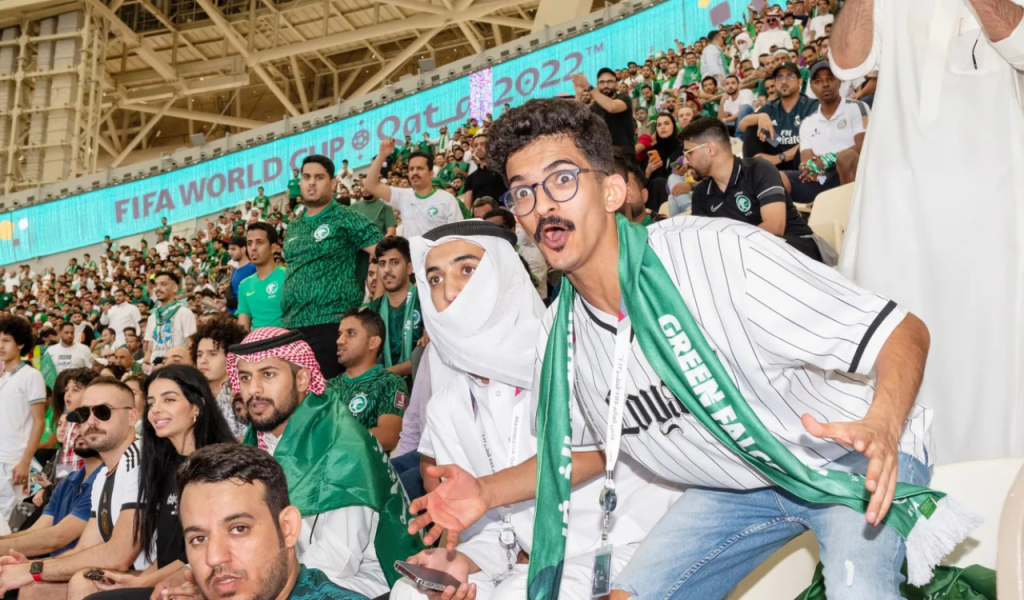
Online algorithms are focused on interaction and promote controversial posts. When content is viral content the excitement of the fans increases, provoking violent communication. Verbal combat usually leads to organized assaults against followers of the opponent. This virtual space builds fan identity and mounts digital aggression, establishing a competitive space that does not just conclude in stadiums but global online communities.
Psychological Impact on Players
The fan wars in social media could have an impact on the psychological performance of players. Confidence is affected by negative remarks, trolling and threats. Even professional athletes are under the pressure of digital criticism. Online attention could be a stressor, distracting, and lead to lower concentration, which influences in-game choices. Observation of the mood of people would assist teams in comprehending the likely psychological complications of their players in high-stake matches.
Morale is a also affected by positive support. Confidence can be increased with the help of viral appreciation posts, fan campaigns, and encouragement. Teams tend to read supportive materials in order to overcome negativity. Digital sentiment awareness will enable coaching personnel to train players on ups and downs of the emotional state when exposed to social media at major tournaments.
Coordinated Fan Campaigns
Fans carry out campaigns against opponent teams or followers. To exert dominance, it is done through coordinated hashtags, posting schedules, and viral challenges. Such campaigns tend to intensify fights attracting a lot of attention. International competitions increase participation due to the desire of fans to be seen online which manifests through the creation of narratives and affects the perception of teams and countries.
A campaign does not necessarily have to be negative, sometimes it is a charity or a healthy competition. Nonetheless, offensive coordination may lead to cyberbullying, harassment and misinformation. To curb the damages, clubs and federations are more and more keeping check on these campaigns to ensure that the online competitions are always within acceptable limits without losing fans to the world cup.
Viral Memes and Misinformation
Fan wars are heavy weapons of memes, which can significantly alter reality or make sarcastic intent on exaggeration. Viral memes may be detrimental to both player and team reputation. False news travels fast contaminating the minds of the people. Fans are involved in quick posting and commenting, which construct online stories that may not be real-life, but become highly viral on the online platforms.
The responsible interventions consist of official club communications and fact-checking projects. The influence of misinformation can be contained by educating fans on the subject. Viral content proves the duality of social media: on the one hand, it is entertaining, on the other, it leads to the intensification of conflicts and the acquisition of a long-term effect with a lasting impact on the team image and mental wellbeing of players at the global tournament.
Influence on Match Atmosphere
The online war of fans impacts on the match atmosphere even in real life. Players who are sensitive to the problem of social media backlash might change the field behavior. Online criticism or praise may cause psychological pressure to teams. The indirect pressure on referees also occurs because the social sentiment increases the controversial decisions, forming the sense of fairness based on digital narratives.
Crowd talk and digital commentary are often a consequence of the online discussions. The online campaigns coupled together may lead to an increase in the energy or tension within the stadiums. Social media is a feedback mechanism that links virtual wars among fans to real life matches. This interaction can be used to predict the behavioral patterns in games, especially when it is known to those who organize the games.
Trolls and Cyberbullying
Cyber bullying and trolling are common in fan wars. Negative campaigns are against players or teams or against opponents. Incidents of threats, insults, derogatory remarks, etc., increase emotional stress, which affects the perception of the population and the wellbeing of players. Surveillance of such behaviors assists the ruling authorities to safeguard stakeholders and ensure that all fans work in a secure online field.
Legal and ethical measures are used to address online abuse. There exist clubs and federations that advocate reporting and block systems. The anti-bullying movements train the followers to interact with each other in a respectful manner. Reduction of toxicity will ensure that digital platforms will be an occasion of celebration, rather than victimization during high profile sporting events like the world cup.
Global Cultural Clashes
Fan behavior in the case of social media fan wars displays differences in culture. Different nations have humor, sarcasm and criticism. Online conflicts are usually aggravated by misinterpretation, which is a factor to consider due to differences in the interpretation of various cultures. International tournaments enhance such differences where players and fans are exposed to varied forms of communications and expectations to global audiences.
Cultural awareness is accomplished in terms of clubs and federations. Cultural awareness will be promoted, and this is will reduce the level of misunderstanding. Supporters can revel in differences and minimize conflict. It has online moderation and community policies that enable them to maintain a balance between healthy competition and courtesy and ensure that global tournaments are inclusive online spaces.
Sponsorship and Reputation Impact
There are sponsorship and reputation impacts on the team caused by online fan wars. Poor online campaigns can impact the brand image, sales of goods and business opportunities. The social sentiment is monitored by the companies to enable them in protecting investments. In order to maintain credibility, it is possible to be strategic in responding to individuals and risk management in the global digital environment.

The positive viral campaigns on the other hand increase the brand loyalty and brand visibility. The use of fans is employed in order to augment the supportive stories of the sponsors. The internet must provide commercial impacts of fan wars, which will help the stakeholders through the confusing is relationship between online practices and monetary requirements of the world cup.
Management and Moderation
Teams, federations and platforms in an attempt to control fan wars exercise moderation. The comment filtering, observation and reporting systems of the accounts also prove useful in discouraging ill-willed interactions. The implementation of strategic communication and official messages leaves an imprint on the behavior of the fans and guarantees the Internet competition has a healthy and good-natured character during the competitions.
During education, respectful treatment is promoted. The fans must be advised to be positive and this reduces the harassment. Monitoring trends will give the authorities a prior act to a conflict. Adequate care of digital relationships may ensure that tournament integrity is maintained, players, fans and other people in the community remain safe from the negative effects of social media fan wars.
FAQs About Social media fan wars during World Cup
Final Thoughts
One of the strong elements of the contemporary world cup is the fan war via social media. They affect players, teams and even audiences across the world. Though competition is fun, negative campaigns bring about pressure, damage to reputation and strain. The regulation of these dealings is effective in order to make the internet world a good place to interact, rejoice, and even compete spirit in global tournaments across the globe.
Toxicity is reduced with the aid of effective moderation, cultural awareness, and education of fans. Federations and teams should manage to find a balance between responsibility and engagement using social media in a constructive way. The dynamics of online fan wars can be used to safeguard the stakeholders, keep the integrity of the tournament, and retain the excitement, passion, and sense of community that transforms the World Cup into a universal sport event.